
Journey Into the Heart of Pakistan
Dive deep as we uncover the rich culture, landscapes, and stories that shape this fascinating destination.
5/15/20267 min read
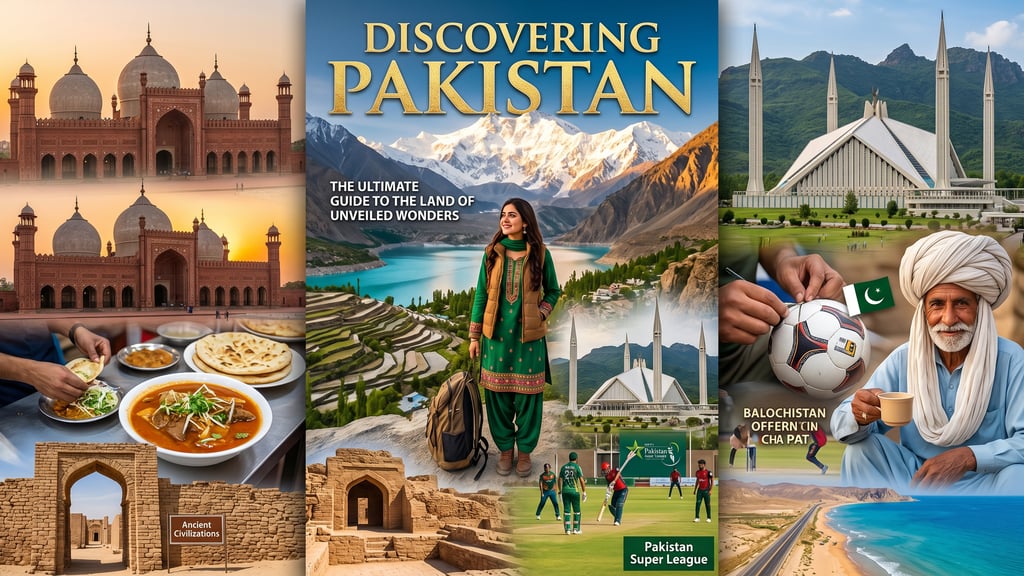
Discovering Pakistan: The Ultimate Guide to the Land of Unveiled Wonders
Welcome to one of the world’s best-kept travel secrets. Pakistan is a country where ancient civilizations meet breathtaking natural landscapes, and where legendary hospitality defines the local way of life. Stretching from the Arabian Sea in the south to the jagged, snow-capped peaks of the Karakoram Range in the north, this South Asian gem is a vibrant mosaic of cultures, flavors, and histories.
Whether you are an adventure seeker looking to conquer some of the world's highest mountains, a history enthusiast eager to walk through ancient ruins, or a foodie ready to dive into rich, aromatic cuisines, Pakistan offers an unforgettable journey. In this comprehensive guide, we unlock the magic of Pakistan, exploring its modern pulse, deep-rooted traditions, and everything in between.
Table of Contents
Introduction: The Identity of Pakistan
Major Cities & Geography
Culture & Religion
Fashion & Lifestyle
Big Things & Famous Companies
Must-Visit Places (Modern & Nature)
Historical Places & Deep History
Cuisine & Food Culture
Sports & Entertainment
Conclusion & Essential Travel Tips
Introduction: The Identity of Pakistan
Situated at the crossroads of South Asia, Central Asia, and the Middle East, Pakistan holds a uniquely strategic position on the global map. Officially known as the Islamic Republic of Pakistan, it gained independence in 1947. Today, it stands as the fifth most populous country in the world, boasting a young, dynamic, and resilient population.
Pakistan's identity is shaped by its diversity. It is a land where multiple languages—such as Urdu, Punjabi, Sindhi, Pashto, Balochi, and Saraiki—coexist beautifully. From the bustling coastal life of the south to the serene, isolated mountain kingdoms of the north, Pakistan is not just a destination; it is an sensory experience that challenges stereotypes and rewards the curious traveler.
Major Cities & Geography
Pakistan’s geography is incredibly diverse, featuring coastal beaches, expansive deserts, fertile agricultural plains, and three of the world’s most famous mountain ranges: the Himalayas, the Karakoram, and the Hindukush.
Islamabad (The Capital)
Nestled against the lush green backdrop of the Margalla Hills, Islamabad is a purpose-built, meticulously planned capital city. Known for its cleanliness, wide tree-lined avenues, and peaceful atmosphere, it serves as the administrative heart of the country and the perfect, calm starting point for international travelers.
Karachi (The Financial Hub)
Located on the coast of the Arabian Sea, Karachi is Pakistan’s largest city and its economic engine. Often called the "City of Lights," it is a sprawling, fast-paced megalopolis that never sleeps. It features a fascinating mix of colonial-era architecture, modern skyscrapers, and diverse communities from every corner of the country.
Lahore (The Cultural Heart)
If you want to experience the soul of Pakistan, you must visit Lahore. Famous for the proverb "He who has not seen Lahore has not been born," this city is a treasure trove of Mughal history, vibrant festivals, art, and an unparalleled street food culture.
Peshawar (The Frontier Gateway)
As one of the oldest living cities in South Asia, Peshawar stands near the historic Khyber Pass. It is the gateway to the northwest, characterized by its legendary Pashtun hospitality, historic bazaars, and a rugged, timeless charm.
Culture & Religion
The culture of Pakistan is a beautiful blend of various ethnic groups, unified by shared values of respect, family bonds, and extraordinary hospitality.
The Core Value of Hospitality: In Pakistan, guests are considered a blessing from God (Mehman Rahmat Hota Hai). Foreign travelers are frequently overwhelmed by locals refusing payment for tea, offering free meals, and welcoming strangers into their homes with open arms.
Religious Demographics: The vast majority of the population (approximately 96%) practices Islam. The country is home to deeply spiritual Sufi shrines, beautifully designed mosques, and vibrant Islamic traditions.
Religious Minorities: Pakistan also embraces significant Christian, Hindu, and Sikh communities. The country holds immense religious importance globally; it features sacred sites for Hinduism, the historic roots of Buddhism in the Gandhara region, and the Kartarpur Corridor, one of the holiest pilgrimage sites for Sikhs worldwide.
Fashion & Lifestyle
Pakistani lifestyle seamlessly bridges the gap between deep-rooted traditions and fast-paced modernity.
The National Dress: Shalwar Kameez
Unlike many countries where traditional clothing has been replaced by Western fashion, the Shalwar Kameez remains the undisputed king of Pakistani fashion. Worn proudly by both men and women across all social classes, it consists of loose trousers (shalwar) paired with a long tunic (kameez). It is incredibly comfortable, perfectly suited for the climate, and ranges from simple cotton everyday wear to heavily embroidered silk and chiffon masterpieces for weddings. In regions like Dera Ghazi Khan and parts of Balochistan, men elegantly wear distinctively large, traditional shalwars reflecting their proud tribal heritage.
Modern Trends vs. Everyday Living
In major urban centers, global fashion trends blend with local styles. Young Pakistanis frequently pair denim jeans with short kurtis, or sport high-street Western attire in professional spaces. The lifestyle in cities revolves around social gatherings, café culture, and grand, multi-day weddings that are famous worldwide for their music, color, and opulence.
Big Things & Famous Companies
Pakistan is home to massive engineering marvels, breathtaking natural landmarks, and globally recognized industries.
Notable Landmarks
The Karakoram Highway (KKH): Often called the "Eighth Wonder of the World," this incredible highway cuts through the highest mountain ranges, connecting Pakistan with China. It is a masterpiece of modern engineering.
Tarbela Dam & Mangla Dam: These are among the largest earth-filled dams in the world, vital for the country's water storage and power generation.
The Salt Range & Khewra Mines: Pakistan houses the Khewra Salt Mine, the world’s second-largest salt mine, from which the world-famous pink Himalayan salt is sourced.
World-Renowned Brands & Industries
Sialkot’s Sports Industry: The city of Sialkot is the global capital for sports manufacturing. It produces the premium, hand-stitched soccer balls used in the FIFA World Cups, alongside top-tier cricket and field hockey gear.
Textile Giants: Brands like Gul Ahmed, Khaadi, and Alkaram have taken Pakistani textiles to the international stage, celebrated for their premium lawn fabric and intricate prints.
The Tech Explosion: Companies like Systems Limited and a booming sector of software houses have made Pakistan a major global hub for freelance IT talent and software development.
Must-Visit Places (Modern & Nature)
If you are packing your bags for Pakistan, here are the top 5 must-visit modern and natural tourist spots:
1. Faisal Mosque (Islamabad): An iconic symbol of Pakistan, this stunning contemporary mosque was designed by a Turkish architect. Shaped like a desert Bedouin tent, it lacks traditional domes but stands majestically against the Margalla Hills.
2. Hunza Valley (Gilgit-Baltistan): Often compared to Shangri-La, Hunza offers dramatic views of towering peaks like Rakaposhi. It is famous for its vibrant blue lakes (like Attabad Lake), terraced orchards, and exceptionally welcoming, long-living locals.
3. Fairy Meadows & Nanga Parbat: Located at the base of the world's 9th highest mountain, Nanga Parbat (The Killer Mountain), the Fairy Meadows are lush, alpine green pastures that offer an unforgettable camping experience under a starry sky.
4. Skardu and Deosai National Park: Deosai is the second-highest plateau on Earth. Known as the 'Land of Giants,' it turns into a breathtaking carpet of wild alpine flowers and clear streams during the summer.
5. The Coastal Highway & Kund Malir (Balochistan): For a completely different landscape, drive down the Makran Coastal Highway. Here, unique rock formations look out over the pristine, untouched blue waters of Kund Malir Beach.
Historical Places & Deep History
Pakistan’s history spans millennia, making it a cradle of ancient human civilization.
Ancient Civilizations
Long before modern borders, the Indus Valley Civilization flourished here. Mohenjo-daro (Sindh) and Harappa (Punjab) represent some of the earliest sophisticated urban planning in human history, dating back to 2500 BCE, complete with structured drainage systems and brick houses.
The Mughal Era and Beyond
The Lahore Fort & Shalimar Gardens: These UNESCO World Heritage sites showcase the peak of Mughal grandeur, featuring intricate fresco work, marble pavilions, and geometric gardens.
Badshahi Mosque: Built by Emperor Aurangzeb in 1673, this red sandstone masterpiece in Lahore was once the largest mosque in the world and remains a breathtaking sight.
Taxila: An ancient center of Gandharan Buddhism, Taxila attracted scholars from all over the world to its universities and monasteries, bridging Greek and South Asian art forms.
Cuisine & Food Culture
Get ready for an explosion of flavors! Pakistani food is rich, aromatic, and deeply satisfying, varying greatly across different regions.
Signature Dishes
Biryani: The ultimate celebration dish. A fragrant mix of basmati rice, saffron, and heavily spiced marinated meat (chicken, beef, or mutton).
Nihari: A slow-cooked beef stew, simmered overnight until the meat melts off the bone, served hot with fresh naan and garnished with ginger, lemon, and green chilies.
Karahi: Meat cooked in a wok-like pan with a thick tomato, garlic, and ginger base, packed with fresh green chilies.
Street Food and Eating Habits
From the sizzling seekh kebabs of Lahore’s Food Street to the iconic Chapli Kebabs of Peshawar, street food is a central part of daily life. No meal is complete without Chai (strong milk tea mixed with cardamom), which serves as the social glue of the country. People gather at outdoor dhabas (roadside cafes) at all hours of the night to chat over a steaming cup of tea.
Sports & Entertainment
Sports and cultural arts are the heartbeat of Pakistani entertainment, uniting the nation like nothing else.
Cricket Fever: Cricket is not just a sport in Pakistan; it is a religion. The national team has produced legendary icons like Imran Khan, Wasim Akram, and Babar Azam. When the national team plays, or during the Pakistan Super League (PSL) T20 tournament, streets empty out and the entire country tunes in.
Field Hockey & Squash Legends: While hockey is the official national sport, Pakistan historically dominated the world stage in both field hockey and squash, producing legends like Jahangir Khan, who went undefeated for 555 consecutive matches.
Music and Entertainment: From the traditional, mesmerizing Sufi rhythms of Qawwali (immortalized by Nusrat Fateh Ali Khan) to the globally viral tracks of Coke Studio, Pakistan's music scene is immensely influential. Cinema and television dramas are also incredibly popular, celebrated across South Asia and the diaspora for their powerful scripts and realistic acting.
Conclusion & Essential Travel Tips
Pakistan is a country that defies easy description. It is a land of striking contrasts—where ancient history sits beside fast-moving modern developments, and where rugged, imposing mountains welcome you with the gentlest, warmest hospitality. It is a destination that touches your soul and changes the way you see the world
💡 Golden Tips for Travelers:
Best Time to Visit: October to April is ideal for exploring the plains, deserts, and southern cities like Lahore and Karachi. May to September is the perfect window to trek through the stunning northern valleys like Hunza and Skardu.
Dress Code: Respect the local culture by dressing modestly. While Western clothing is perfectly fine in upscale urban areas, wearing a Shalwar Kameez or loose clothes that cover your shoulders and knees is highly recommended when visiting rural areas or religious sites.
Currency & Connectivity: The local currency is the Pakistani Rupee (PKR). Cash is king at street markets and smaller towns, though credit cards are widely accepted in major cities. Pick up a local SIM card (like Zong or Telenor) at the airport for excellent data coverage, even high up in the mountains!
Hadistore@gmail.com
© 2025. All rights reserved.